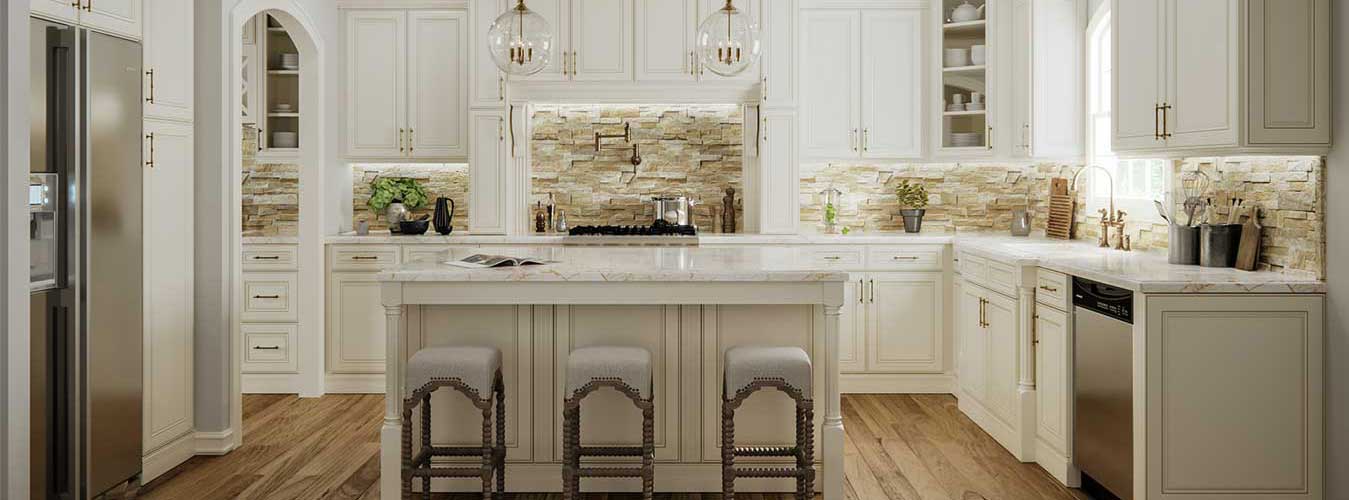
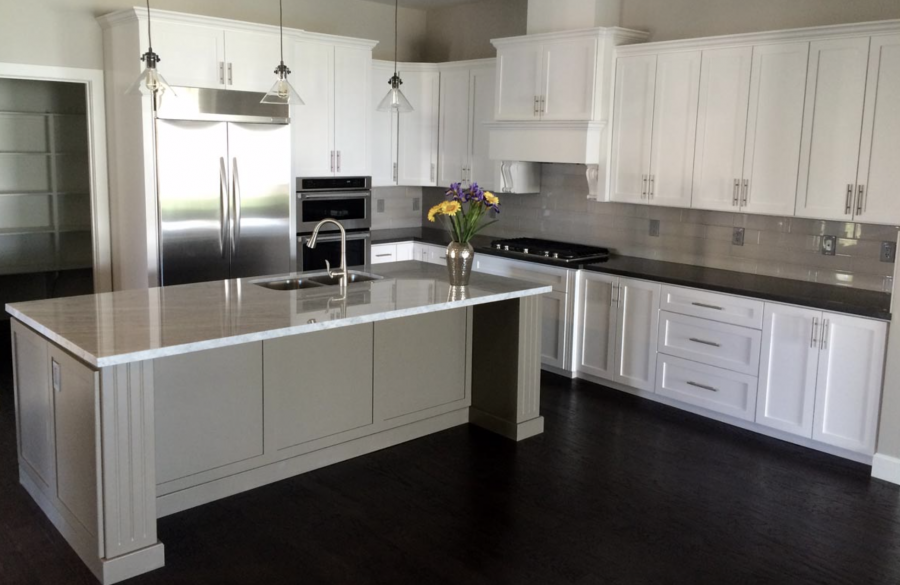
The difference between a kitchen that stops people in their tracks and one that’s quietly forgettable almost always comes down to the same thing: the cabinetry. The way it fits cleanly into the room’s corners, fills the ceiling height without gaps, and looks like it was always meant to be there. That’s what
custom built cabinets do that stock units simply cannot. In communities like Okotoks, Airdrie, Chestermere, and the newer estates spreading south toward DeWinton, homes vary widely in footprint and character. Off-the-shelf solutions rarely honour that. Custom cabinetry does.
1. Stock vs. Custom: What You’re Actually Comparing
Walk into any big-box home improvement store and you’ll find cabinet displays. Shaker doors in white, a few sizes, a handful of finishes. They’re serviceable, and for a rental unit or a tight budget renovation, they get the job done.
But comparing stock cabinets to custom built cabinets is a bit like comparing a suit off the rack to one tailored to your measurements. Both cover the basics. Only one actually fits.
Stock cabinets come in fixed increments, typically 3-inch width jumps. That means if your kitchen wall is 94 inches wide, you’re filling the gaps with filler strips and hoping it doesn’t look obvious. The quality of materials tends toward the economical end: melamine boxes, veneered fronts, basic joinery. They’re designed for speed and volume, not longevity.
Semi-custom cabinets sit in the middle. They offer more door style and finish options, and manufacturers can accommodate some modifications. But the core boxes remain standardised, and your choices work within a manufacturer’s catalogue rather than starting from scratch.
Custom built cabinets are built to your space, your specifications, and your life. The dimensions are yours. The materials, internal configurations, hardware, finish, and storage features are all chosen around how you actually use the space. A baker might want a lower section of countertop with deep drawers below. A family with young children might want all lower cabinets on full-extension soft-close drawers rather than doors with shelves. A home office built-in might need a specific column width to accommodate existing technology.
None of that is possible with stock. All of it is standard practice with custom.
2. Why Calgary Homes Specifically Benefit from Custom Solutions
Calgary’s residential landscape is genuinely varied, and that matters more than people realise when it comes to cabinetry.
Newer homes in communities like Mahogany, Cranston, or the developments around Okotoks often feature open-concept main floors where the kitchen, dining area, and living room flow into one space. In that context, cabinetry isn’t just storage. It defines the room. An island that transitions into a breakfast bar, a perimeter of tall upper cabinetry that draws the eye toward a feature wall — these design moves only work when the cabinetry is built with the whole space in mind.
Older inner-city homes and established neighbourhoods in Airdrie or Chestermere present a different challenge: irregular walls, non-standard ceiling heights, soffits from older builds, and layouts that simply weren’t designed with modern kitchen workflow in mind. Stock cabinets, with their fixed sizes, produce awkward filler gaps or force a layout compromise. Custom cabinets are built after precise measurements are taken, so the finished result fills and flows correctly.
Then there’s the practical reality of Alberta’s climate. Kitchens experience more humidity variation than most rooms in a home. Quality custom cabinetry uses high-density engineered woods with water-resistant coatings or solid wood species selected for dimensional stability. In a climate where indoor air shifts from dry prairie winters to humid summer cooking activity, that material choice matters over the long term.
Calgary homeowners also tend to stay in their homes. According to Statistics Canada data, Alberta homeowners have among the longer average tenure rates in Canada’s major provinces. That changes the calculus on investment. When you plan to be somewhere for 15 to 20 years, building it properly once is almost always more economical than replacing cheaper cabinetry twice.
3. What Goes Into Building Custom Cabinets: Process, Materials, and Time
Understanding the process helps set realistic expectations, and it also helps you evaluate the quality of any cabinetry company you speak with.
Design Consultation
The first conversation should be substantive. A good cabinetry designer will ask how your household uses the kitchen day to day, who cooks and how often, what you store and where, whether you have accessibility considerations, and what your aesthetic preferences are. Measurements come next, and they’re taken properly — not just width and height, but checking for out-of-square walls, noting beam positions, HVAC vents, and electrical placements.
From that, you should receive detailed drawings. Three-dimensional renderings are now standard among quality custom shops and give you a reliable preview of how the finished space will look before anything is built.
Material Selection
Solid wood remains the benchmark for custom cabinetry. White oak, maple, and walnut are popular choices in Calgary right now, each bringing different grain character and staining properties. Engineered wood cores with solid wood fronts are also common, combining dimensional stability with the look of natural wood.
Finishes have moved strongly toward matte and low-sheen in recent years. Anti-fingerprint matte coatings have become particularly practical for family kitchens where high-gloss was always a maintenance challenge. Two-tone schemes — a darker lower section paired with a lighter or natural upper — have become a signature of custom kitchen design across the Calgary area.
Lead Times
Custom cabinetry takes time to build properly. Expect 8 to 14 weeks from finalised design to installation, depending on the complexity of the project and the production schedule of your cabinetry maker. That timeline is worth planning around in any renovation project. Rushing the fabrication phase is where quality shortcuts tend to appear.
Installation
Custom installation is its own skill set. The boxes are brought in and fitted to the actual room conditions measured during the design phase. Adjustments are made on-site as needed. Properly installed custom cabinetry should feel integrated into the architecture of the room, not placed against it.
4. Design Trends Shaping Custom Kitchen Cabinets in Calgary Right Now
Design preferences shift, but good custom cabinetry is built to outlast trends. That said, knowing what’s resonating with Calgary homeowners right now helps inform choices that feel current today and classic in a decade.
Warm Neutrals Over Stark White
White kitchens aren’t disappearing, but they’re no longer the automatic default. Warm cream, taupe, greige, and biscuit tones have taken over as the base palette for
custom kitchen cabinets in Calgary. They feel less clinical, age more gracefully in full light, and pair naturally with the warmer stone and wood tones popular in current countertop and flooring selections.
Nature-inspired accent colours — sage, grey-green, terracotta, muted ochre — are appearing on islands or lower cabinetry as a counterpoint to the neutral upper sections. Deep charcoals and rich chocolate browns are gaining ground for bolder design statements.
Textured Surfaces and Architectural Detail
Flat panel doors remain dominant because they’re clean and versatile, but fluted and reeded wood panels are increasingly used as accent elements on islands, as range hood surrounds, or on end panels facing into a room. The texture adds depth and an architectural quality that flat surfaces can’t replicate.
Integrated and Handleless Profiles
Push-to-open mechanisms and integrated recessed handles (sometimes called a J-pull profile) have become a popular choice in contemporary builds. The visual result is a sleeker, more seamless cabinet face. In open-plan homes where the kitchen is always partially visible from the living space, that visual calm matters.
Functional Storage Intelligence
This is where custom cabinetry genuinely separates from everything else:
- Deep drawer banks for base cabinets rather than lower doors with shelves
- Pull-out pantry towers
- Dedicated spice drawer inserts
- Vertical tray dividers for baking sheets
- Integrated waste and recycling pull-outs
- Hidden charging stations
These features aren’t afterthoughts in custom work — they’re designed in from the beginning around how the household actually operates.
Cross-Room Consistency
Open-concept Calgary homes increasingly benefit from cabinetry that flows coherently across the kitchen, mudroom, laundry room, and home office. Using the same door profile, wood species, or finish family across rooms creates a sense of intentional design that adds to perceived home value.
5. The Real Cost Conversation: Investment, Value, and Longevity
This is the conversation that matters most, and it’s worth having honestly.
Custom built cabinets cost more upfront than stock or semi-custom options. In the Calgary market, quality custom cabinetry typically runs from around $800 to $1,500 per linear foot installed, depending on materials, complexity, and internal fitments. A full kitchen project can represent a significant investment.
But that number needs context.
Stock cabinets priced at a fraction of custom carry shorter functional lifespans. Ten to twelve years is a common estimate before the boxes begin to fail, the finishes wear, or the design starts to look dated enough that a homeowner wants to replace them. Semi-custom extends that somewhat, perhaps 15 to 20 years under reasonable conditions.
A properly built set of solid wood or high-quality engineered custom cabinets, well installed and reasonably maintained, should last 25 to 30 years without structural issues. Genuine wood fronts can be professionally refinished to update the look without replacing the boxes entirely. That refinish option is not available with most stock products.
When you calculate cost over time rather than cost upfront, the per-year expense of custom cabinetry narrows considerably against its cheaper counterparts.
There’s also the question of resale value. Calgary’s real estate market has seen sustained demand in the surrounding communities of Okotoks, Airdrie, and Chestermere as buyers seek more space at competitive prices. In that market, a kitchen with quality custom cabinetry is a visible differentiator. It photographs better, shows better, and signals to buyers that the home has been built or renovated with care.
Kitchen renovations consistently rank among the highest-return improvements a homeowner can make. Within that renovation, the cabinetry is the single largest visual and functional element.
6. Mistakes Homeowners Make When Choosing Cabinetry
These come up often enough to be worth naming directly.
Prioritising price over quality at the box level. The door style is what you see, but the cabinet box is what determines how the kitchen holds up over time. Dovetail drawer boxes, full-plywood construction, proper joinery at corners — these are the structural elements worth scrutinising. A beautiful door on a cheaply built box is short-lived.
Not accounting for the full cost of stock. The price tag on stock cabinets at a home centre doesn’t include installation, filler strips, additional moulding to close gaps, or the labour cost of working around the limitations of fixed sizes. When those costs are added, the gap between stock and custom narrows more than most people expect before starting the process.
Choosing a finish trend over a timeless material. High-gloss white looked sharp for a decade before it became visually exhausting to maintain and slightly dated. Choosing a finish primarily because it’s popular right now carries risk. Natural wood species in enduring finishes age well. Overtly trend-driven finishes often date a kitchen faster.
Underestimating storage needs. Most homeowners underestimate how much they actually store in a kitchen until the renovation is finished and they’re trying to put everything back. Working with a cabinetry designer who asks detailed questions about storage requirements — and then builds in more than you think you need — consistently produces more satisfying results.
Rushing the design phase. The decisions made in the design phase determine everything built afterward. Changes made during fabrication are expensive. Changes made after installation are more expensive still. Taking the time to review drawings carefully, live with the layout on paper for a few days, and ask questions before signing off saves significant stress and money downstream.
7. Beyond the Kitchen: Where Custom Built Cabinets Make Sense Throughout Your Home
Calgary homes, particularly in communities with larger footprints, benefit from custom cabinetry well beyond the kitchen.
Mudrooms in Alberta are not optional. Between winter boots, ski gear, hockey bags, and the general volume of outdoor clothing a prairie family cycles through, a mudroom with built-in custom lockers, bench seating with storage below, and upper cabinet space for seasonal items earns its investment immediately.
Home offices and built-in study spaces have become more relevant for obvious reasons. A wall of custom built-in shelving and desk cabinetry in a dedicated work-from-home space adds both function and a level of architectural finish that freestanding furniture cannot match.
Primary suite walk-in closets in larger homes deserve the same attention as a kitchen. Custom wardrobe systems built to the dimensions of the space, with the storage configuration suited to the household’s wardrobe, are consistently one of the more satisfying upgrades homeowners describe after completion.
Laundry rooms benefit enormously from well-designed cabinetry. Upper storage for detergents and supplies, folding counters at the right height, and lower cabinetry that conceals appliances or creates workflow space turn a purely functional room into one that’s genuinely pleasant to use.
The common thread across all of these is the same principle that applies in the kitchen: building to the space and to actual use patterns produces results that stock solutions simply cannot replicate.
8. What Crown Custom Cabinetry Clients Are Saying
Reading about the benefits of custom cabinetry is one thing. Seeing it play out in actual Calgary homes is another.
“We built a new home in Okotoks and used Crown for our kitchen, mudroom, and master closet. The design process was thorough from the first meeting, and the finished result looked exactly like the drawings we approved. Three years in and everything still operates perfectly. We get compliments on the kitchen constantly.”
— Sarah M., Okotoks
“Our Airdrie home had an awkward kitchen layout that made every stock option look like a compromise. Crown came in, took proper measurements, and designed around our actual space. The difference between what we had before and what we have now is night and day. Worth every dollar.”
— David & Karen T., Airdrie
“What stood out was how much the Crown team listened. We cook a lot, and they designed storage around how we actually use the kitchen. The pull-out pantry, the spice drawer inserts, the soft-close drawers throughout — none of it was an afterthought. It was all planned from the start.”
— Priya R., Calgary (Mahogany)
Recent Projects at a Glance
Crown Custom Cabinetry has completed projects across Calgary and surrounding communities including full kitchen renovations, mudroom built-ins, home office cabinetry, and primary suite wardrobe systems.
- 200+ custom projects completed across Calgary, Okotoks, Airdrie, Chestermere, and DeWinton
- Average project timeline: 8 to 12 weeks from signed design to installation
- Materials used: Solid white oak, maple, walnut, and high-density engineered cores with solid wood fronts
- Finishes: Matte, low-sheen, two-tone, and natural stain, all applied in-house for quality control
Every project begins with a no-obligation design consultation. No pushy sales process. Just a real conversation about your space, your goals, and what’s actually achievable within your budget.
9. Frequently Asked Questions
1. How long does it take to have custom built cabinets made and installed in Calgary?
Most custom cabinetry projects in Calgary run 8 to 14 weeks from finalised design approval to installation, depending on project complexity and the manufacturer’s current production schedule. Planning this lead time into your renovation timeline is important, especially if you’re coordinating with other trades.
2. What is the difference between custom and semi-custom cabinets?
Semi-custom cabinets start from standardised box sizes and allow a range of modifications within a manufacturer’s catalogue. Custom built cabinets are built entirely from your specifications with no fixed size constraints, using the materials and configurations you select. Custom offers more design freedom, a better fit in non-standard spaces, and generally higher-quality construction.
3. Are custom kitchen cabinets in Calgary worth the higher upfront cost?
For homeowners planning to stay in their home long term, the answer is consistently yes. Quality custom cabinetry lasts 25 to 30 years, can be refinished to update the look without replacement, adds measurable resale value, and eliminates the compromises that come with stock sizing. The per-year cost over the cabinet’s lifetime is often comparable to, or lower than, replacing cheaper options twice.
4. What wood species work best for Calgary’s climate?
Maple, white oak, and walnut are popular choices in Calgary for their dimensional stability and finishing versatility. Engineered wood cores with solid wood doors offer additional resistance to seasonal humidity shifts while maintaining the warmth and character of natural wood.
6. Can custom cabinets be added to existing homes in communities like Okotoks or Airdrie?
Absolutely. Custom cabinetry is built to fit the actual dimensions and conditions of your specific space, making it particularly well suited to renovations in existing homes where stock sizing creates awkward gaps or compromises. A design consultation and accurate site measurements are the starting point for any existing home project.
6. How do I choose a custom cabinetry company in Calgary?
Look for a shop with an established design process, detailed 3D drawings provided before fabrication begins, transparent material specifications, and the ability to visit a showroom or see completed work. Ask specifically about box construction quality (dovetail drawers, plywood vs. particle board), the warranty offered, and who handles installation.
Ready to See What’s Possible in Your Home?
If you’ve spent time reading this and found yourself picturing your own kitchen, mudroom, or closet, that’s a good sign the investment is worth exploring seriously.
Crown Custom Cabinetry works with homeowners across Calgary, Okotoks, Airdrie, Chestermere, and DeWinton. Every project starts the same way: a genuine design conversation about your space, your priorities, and your budget. No obligation, no pressure.
Here’s how to take the next step:
Calgary’s best kitchens don’t happen by accident. They’re planned carefully, built properly, and designed by people who understand both the craft and the community they’re building for. Crown Custom Cabinetry has been doing exactly that for homeowners across this region, and the work speaks for itself.