

Why Built-In Laundry Storage Matters
Laundry rooms typically require multiple tasks in a restricted space. It could include laundry and drying area, a sink and a folding surface, as well as cleaning products, pet-care items, seasonal clothing and other household tools. The shelves that are freestanding and portable can make rooms appear messy, particularly when every surface and wall space is required.Built-in cabinetry creates a more deliberate layout. Cabinets can be made to fit precisely the measurements of appliances and plumbing, doors, windows, and points of ventilation. This helps reduce wasted space and creates an area that is clearly defined, allowing laundry to move more easily from sorting, drying, washing, folding and storage.
Full-Height Cabinets Make Better Use of Space
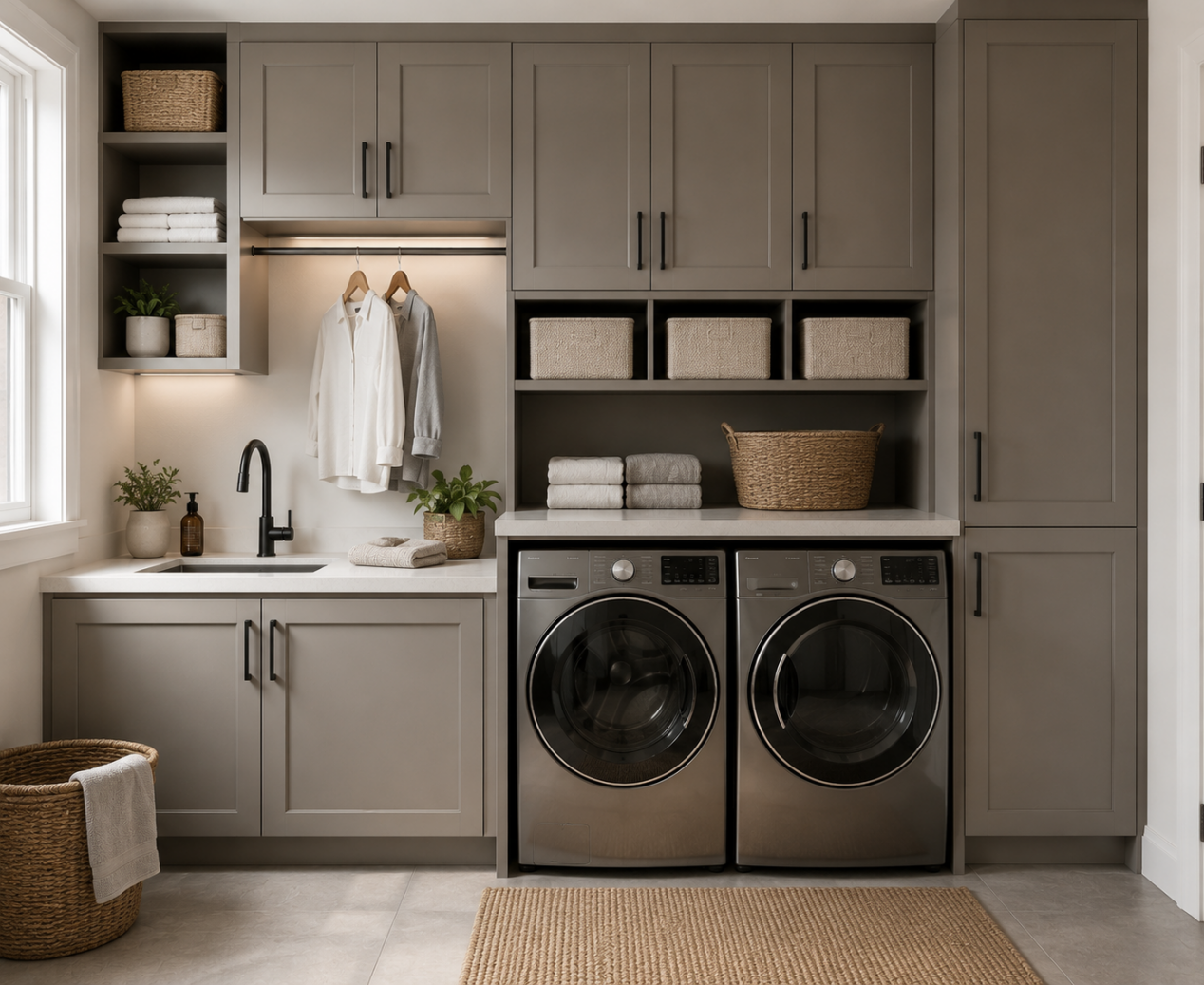
One of the biggest trends in the laundry room for 2026 is the use full-height cabinets. Tall cabinets utilize vertical space that is otherwise empty. They can be used to be used to store the equipment for ironing like Brooms and vacuums additional linens, and other the bulk of household equipment.Cabinets above front-loading machines are a great way to keep the cleaning and detergent products away from the counter. However, the items you use frequently are best stored at a the appropriate heights for reaching them, while items that are heavy or seldom used shouldn’t be hung over the counter. The adjustable shelves allow you to alter the interior of a cabinet to meet the changing needs of your household. For small Calgary homes, stacking laundry and dryers could make space in the floor for narrow cabinets, a with a pull-out hamper, or a folding counter. The cabinet’s layout should provide enough space for doorways to appliances and airflow, as well as servicing and secure access to shut-off water valves.
Concealed Hampers Improve Sorting
Built-in pull-out hampers that are built-in replace the baskets that are loose in contemporary laundry areas. A cabinet can house separate bins that can be removed for light and darks, towels or clothes that are delicate and makes it easier to sort before the wash cycle starts.This arrangement will also keep the dirty laundry from being visible and helps keep baskets away from blocking pathways. The best way to use ventilated hampers is in the event that damp clothes remain in the hamper for a short time, as airflow is able to reduce trapped smells and moisture.
Folding Counters Add Everyday Function
A folding table is among the most beneficial upgrades to laundry rooms. Counters that are placed above front loading machines makes a seamless worktop and keeps clothes from falling into or getting caught behind appliances. It could also be used for folding towels, making clothes, or arranging items prior to putting them away.Counter depth needs to be designed with care to ensure that doors, drawers and appliance controls are easily easy to access. Clean, durable surfaces are crucial since laundry rooms are often subject to splashes of detergent, water as well as heat, lint and. Edges that are rounded or softer will improve the comfort of those who use you are using the counter for prolonged time.
Crown Custom Cabinetry Inc can include fold-down counters, hampers that pull out utility storage and appliance covers in a coordinated arrangement. The aim is making the space more functional rather than simply adding cabinets.
Hidden Drying and Ironing Features
Drying clothes in the air is now more practical thanks to storage features which disappear when not in use. Drying racks with fold-down shelves and retractable hanging rods and pull-out frames are able to make space for delicate clothing without taking over the floor.An ironing board with a built-in iron is another alternative. It is able to fold down into a drawer that is shallow or a cabinet compartment, and then remain near the fold area. These hidden features are especially useful in small laundry rooms in which a fixed dry rack, or an ironing station could limit the movement.
Modern layouts also feature large hanging areas for dresses, shirts uniforms, and other clothing which should be taken out of the dryer quickly. A hanging rod that is placed above a counter can result in an efficient station to sort clothes and make them ready.
Moisture-Resistant Cabinetry and Ventilation
Laundry storage should be planned for areas that is prone to heat, moisture, the vibration of the room, and even leaks could occur. Health Canada recommends maintaining indoor relative humidity of between 30% to 50%, by making use of moisture-resistant materials in places like laundry rooms and fixing leaks as soon as they occur. The agency also recommends that dryers vent outside and that lint traps are cleaned after use, and the vents for exhaust from outside are clear.Edges of cabinets, seams and exposed surfaces must be sealed properly. They should be able to withstand regular cleaning without expanding, peeling or absorbing water. Cabinets must also be free of obstructions such as dryer vents or water lines, electrical connections and access panels.
Before installing built-ins, check drain connections for washers, hoses dryer ducting, shut-off valves. Storage shouldn’t cover up the possibility of a leak, or make necessary maintenance difficult. In Alberta the placement of exhaust outlets might also require clearance from vents for air intakes as well as vented soffits. Therefore, remodeling plans must take into consideration the applicable guidelines for mechanical and building construction.
Multi-Purpose Laundry Rooms in 2026
Laundry rooms are being increasingly integrated with mudrooms, areas for pet washing and entry storage as well as areas for household utilities. This makes the built-in planning more essential because cabinets should be able to accommodate different tasks without creating visual clutter.A bench that has drawers could be a convenient place to take off shoes and store pet items or outdoor equipment. A deep cabinet with utility capabilities can house cleaning equipment and a sink base could be used for hand washing or stain treatment pets’ maintenance. The most efficient designs employ closed storage to make all these functions visually united.
The texture and color also play a role. Soft wood tones, warm neutral finishes, subtle fluting and sleek hardware can make a laundry area feel like an extension of your home rather than a strictly practical space. A consistent finish on cabinets can connect the kitchen or hallways. They can also be used as rooms for mudrooms.
How to Plan a Smarter Layout
Start by measuring the room the size of the room, including appliances, door swings windows, plumbing outlets, and vents. Next, identify the most frequent laundry issues in the household like a lack of storage space for folding clothes, a crowded hamper there is no place to hang clothes or access issues to cleaning supplies.The ideal layout puts washing, sorting folding, hanging and sorting tasks in a planned order. Make sure that everyday items are in reach, keep dangerous items in safe locations and make use of vertical cabinets for items you may need. Make sure there is enough space to allow for servicing of appliances and make sure that the storage you design hinders airflow.
Conclusion
A better built-in laundry room offers practical workflow, sturdy materials, concealed storage and flexible features. Fully-height cabinets with pull-out hampers, fold-away counters as well as hidden drying racks and moisture-aware design will make laundry easier as well as safer and less messy. If you choose a well-planned laundry room cabinet design, Canadian homeowners can transform the space that is often overlooked into a functional space that can meet the changing needs of their household.Frequently Asked Questions
1. What is the best type of laundry room cabinet?The best cabinet depends on room size, appliance placement, and storage needs. Full-height units, upper cabinets, and base drawers can be combined to create an efficient custom layout.
2. Are built-in laundry cabinets suitable for small rooms?
Yes, built-ins can make small rooms more functional by using vertical space and fitting precisely around appliances. Stacked machines, narrow pull-outs, and recessed storage can preserve valuable floor space.
3. What should be stored in laundry cabinets?
Laundry cabinets can store detergent, towels, cleaning supplies, ironing equipment, hampers, hangers, and household tools. Hazardous products should be kept securely away from children and pets.
4. How can laundry cabinets resist moisture?
Use sealed edges, moisture-resistant finishes, durable hardware, and properly protected cabinet materials. Good dryer ventilation and prompt repairs for leaks are equally important.
5. Is a custom laundry room cabinet worth considering?
Custom cabinetry is useful when the room has unusual dimensions, limited clearance, or multiple functions. It allows storage to be planned around the appliances, plumbing, workflow, and household requirements.