

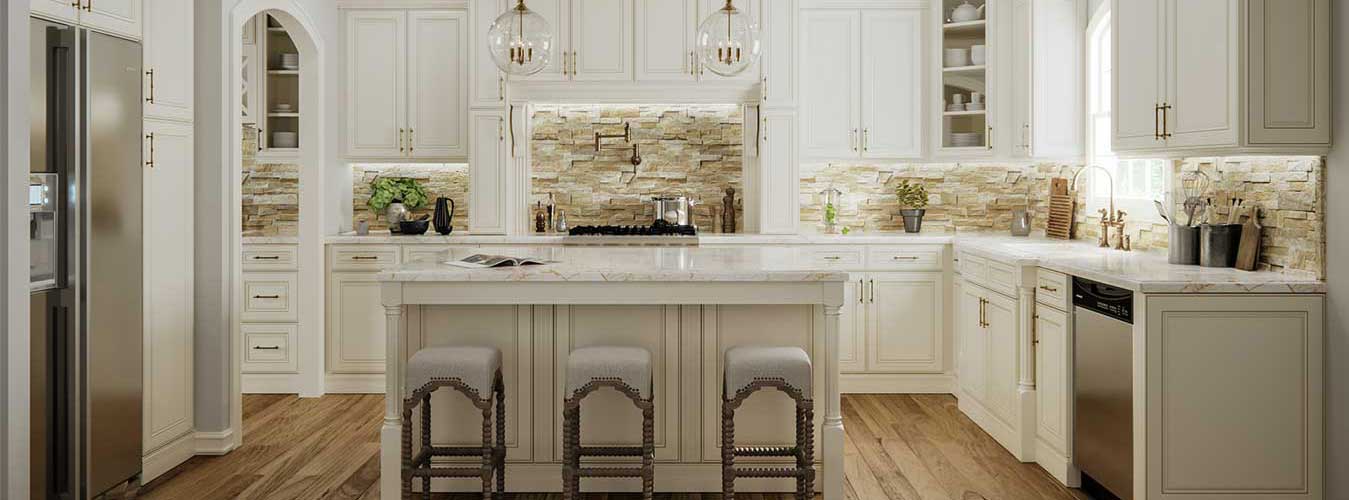
Hardware is the only part of your cabinetry you touch constantly. It is also the most frequently underspecified component in a kitchen renovation in Calgary.
1. Why Hardware Belongs in the Design Conversation Early
Hardware is typically addressed near the end of a cabinet project. That is the wrong sequence. Pull sizing affects how a door or drawer looks proportionally. Finish selection needs to coordinate with tap fittings, appliance handles, and light fixtures. Both decisions are easier to make during the design phase than after the boxes are built. The best kitchen cabinets do not treat hardware as a finishing touch. They treat it as a specification decision made alongside materials and door profiles.2. Hinges: The Component That Does the Most Work
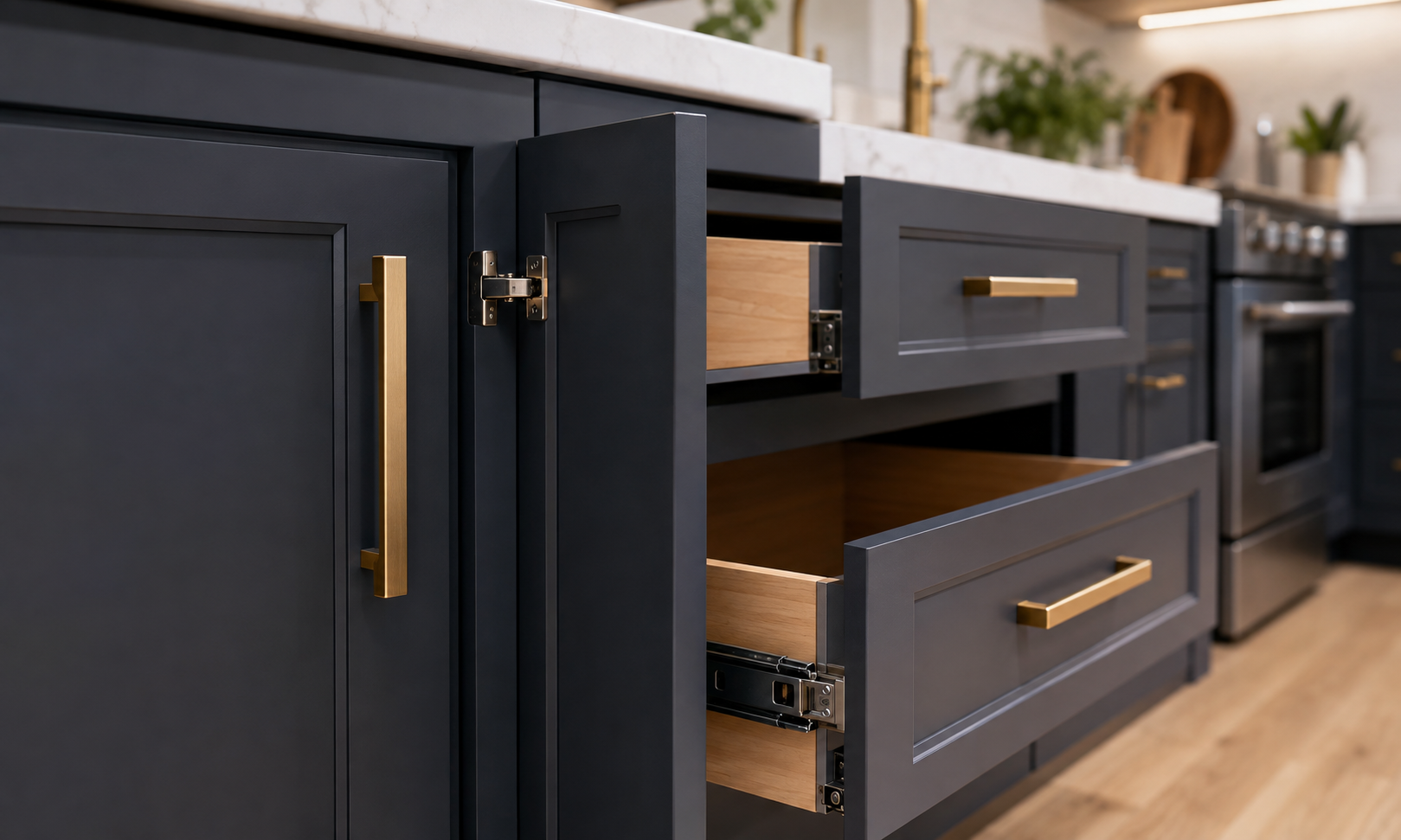
Of every component in a kitchen, hinges log the most daily cycles by a significant margin. Concealed European-style hinges are the standard in quality custom work. They sit inside the cabinet when the door is closed, offer three-way adjustability after installation, and allow precise alignment of every door. That is what produces the even, consistent gaps that distinguish a well-fitted kitchen from a mediocre one. Soft-close hinges add a hydraulic damper that controls the final movement of the door. The door slows automatically rather than slamming. The difference in a working kitchen, particularly one with children, is immediate and permanent. Soft-close hinges cost between $3 and $8 more per hinge than standard versions. On a full kitchen with 40 hinges, that represents $120 to $320 of additional cost. It is consistently one of the better-value upgrades available in a renovation.3. Drawer Slides: Where Daily Function Lives
Drawers in most Calgary kitchens get opened more often than doors. The slide hardware underneath determines how that interaction feels for the life of the cabinetry. Full-extension soft-close slides allow the drawer to open completely to its full depth and then pull back gently into the closed position. In a kitchen where deep drawers have replaced lower cabinet doors with fixed shelves, a layout now standard in quality renovations, full-extension slides are what make the system work correctly.4. Pulls and Knobs: More Than Just Decoration
Pulls and knobs do real functional work. They also set the visual register of the entire kitchen. The current direction in Calgary kitchen renovation is strongly toward bar pulls and integrated handles. Matte black, aged brass, and oil-rubbed bronze are the dominant finishes. Polished chrome and brushed nickel remain serviceable but have moved from aspirational to expected in mid-range work. Sizing matters. Shorter pulls suit narrow drawers and upper doors. Longer pulls work on wide base drawers and appliance panels. Proportional consistency reads as intentional design. The old convention of knobs on doors and pulls on drawers has largely given way to pulls throughout, producing a cleaner visual in open-plan homes.5. Finish Coordination: The Detail That Ties a Kitchen Together
Hardware finish connects cabinetry to the rest of the kitchen. It should coordinate with:- Tap and sink fittings
- Appliance handles and controls
- Light fixture finishes
- Any exposed shelf brackets or hooks
6. Handleless Kitchens: When Push-to-Open Makes Sense
Push-to-open profiles are popular in contemporary Calgary builds. A cabinet face without protruding hardware reads as architecturally calm in open-plan homes. They work well on upper cabinets and pantry doors. On high-traffic base cabinets opened constantly during cooking, some households find the press-to-open action less convenient than a pull over time. The right choice depends on how the household cooks and how much daily interaction each cabinet sees. A cabinetry designer who asks those questions before recommending a hardware approach is one worth listening to. Crown Custom Cabinetry works through all of these decisions with homeowners across Calgary, Okotoks, Airdrie, Chestermere, DeWinton, Cochrane, and Strathmore. Book a free design consultation at crowncabinets.ca.Frequently Asked Questions
- Does hardware really affect the quality of kitchen cabinets? Yes, significantly. Soft-close hinges and full-extension drawer slides affect how the kitchen functions every day. Hardware also signals the overall quality standard of the build. Cabinet makers who specify premium hardware consistently pair it with quality box construction and finishes.
- What hardware finish works best for a kitchen renovation in Calgary? Matte black and aged brass are the most requested finishes in Calgary right now. They coordinate well with warm neutral cabinet colours and natural wood tones. The more important principle is coordinating cabinet hardware with tap fittings and light fixtures throughout the kitchen.
- How much should hardware add to a kitchen renovation budget? Hardware typically represents 3 to 8 percent of the total cabinet budget. On a $30,000 project, that is $900 to $2,400. It is a line item worth planning for explicitly rather than estimating at the end.
- Are soft-close hinges worth the extra cost? Yes. The additional cost is $3 to $8 per hinge. Quieter operation, a longer cabinet lifespan, and reduced stress on door frames justify the upgrade at every budget level.
- When should hardware be selected during a kitchen renovation? During the design phase, before fabrication begins. Pull sizing affects proportional decisions in the drawings and finish selection needs to align with other fixtures. Leaving hardware to the end creates mismatches that are costly to correct.